
TL;DR
Outsourcing operative report transcription helps surgical teams work more efficiently by speeding up documentation, reducing burnout, and improving accuracy. While AI medical transcription software may seem fast, it often misses the nuances of surgical language, which means human editing is still necessary.
Using AI to transcribe your operative notes? Let 360 Transcription handle the editing to make sure your records are complete, accurate, and ready for EHRs and billing. Whether you dictate or use AI, our team helps surgical practices save time and avoid costly errors.
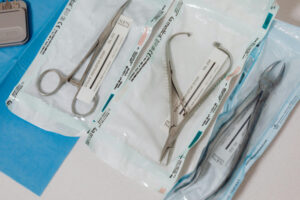 Surgeons already have enough on their plates. Between back-to-back procedures, pre-op consults, and post-op rounds, documentation often becomes the most time-consuming task of the day. Yet operative reports are critical. Summarizing what happened in the OR, what was discovered, and what comes next in the patient’s care are all essential aspects of the job. Operative note transcription must be accurate, timely, and well-structured to meet clinical and legal standards.
Trying to keep up with detailed reporting while staying focused on surgery leads to delays, burnout, and sometimes, rushed or incomplete notes. This not only slows down workflow but can cause issues with billing, chart accuracy, and patient safety.
Outsourcing transcription for operative reports is a simple way to streamline your documentation process. Here’s how it helps:
Our transcriptionists specialize in medical transcription for the operating room, understanding terms related to procedures, incisions, blood loss, and more. Every report goes through quality checks to ensure nothing is missed. Accurate transcription supports faster billing and reduces delays caused by documentation errors.
1. High-volume surgery centers: Busy clinics that handle dozens of procedures each week often face a documentation backlog. With outsourced transcription, surgeons can dictate immediately after surgery and move on to the next case while their reports are being finalized in the background.
2. Surgeons without scribes: In settings where there’s no dedicated scribe or assistant, surgeons are often stuck typing their own reports at the end of the day. Outsourced services eliminate that late-night documentation grind.
3. Staff shortages or turnover: If your practice recently lost a transcriptionist or is struggling to hire due to staffing shortages, outsourcing can fill that gap instantly and keep things running smoothly.
4. Hospital systems looking to cut overtime: Transcription delays often lead to support staff staying late or coming in early. Outsourcing transcription helps reduce those extra hours and keeps operations lean.
5. Multi-location practices with inconsistent workflows: Centralizing transcription through a single outsourced provider like 360 helps standardize documentation quality across locations and specialties, leading to fewer errors and delays.
Time saved on documentation directly translates to improved patient care and smoother coordination across departments. With a reliable transcription partner:
Over time, these changes lead to stronger surgical team performance, fewer administrative headaches, and better outcomes for patients.
Many hospitals and private practices have turned to AI medical transcription software for speed. But while these tools are improving, they still struggle with the complexity and nuance of surgical language. Terms can be misunderstood, sentences misread, and context missed entirely. That means a human still needs to go through the final product, editing and cleaning it up for accuracy. Human transcription vs AI software isn’t a competition; it’s a collaboration when done right.
That’s where 360 Transcription offers real value. Whether you use AI-generated text or traditional dictation, we help ensure your operative report transcription is clean, accurate, and ready to go—without adding hours to your day.
Even if you’re already using AI to transcribe surgery notes, chances are you’re spending time cleaning them up—or worse, missing small errors that can create big problems. 360 Transcription offers editing services specifically for AI-generated medical documentation, giving your team peace of mind that reports are ready for upload, review, or billing.
We don’t just correct typos. We fix formatting, clarify unclear sections, and verify that terminology matches the procedure described. That means fewer delays and fewer headaches.
We work with surgeons, hospitals, and outpatient centers to deliver high-quality, HIPAA-compliant operative report transcription services. Whether you need same-day TAT or prefer next-day delivery, our team is ready to meet your workflow. With FTP upload options and EHR compatibility, the process is seamless from start to finish. Medical transcription remains a critical service despite changes in healthcare tech.
Finding the right transcriptionists also makes a big difference. Working with professionals who understand medical context – not just the words – ensures clarity, compliance, and consistent quality.
© 2026 360 Transcription. All rights reserved. Website by LuccaAM.com