
Summary:
Pathology transcription converts spoken observations into clear, accurate medical reports that support faster diagnoses and seamless lab communication. It’s the connection point between what the pathologist says and what ends up in the patient’s medical record.
CTA:
Need accurate, secure pathology transcription? Get a quote from 360 Transcription today – trusted nationwide for HIPAA-compliant medical documentation.
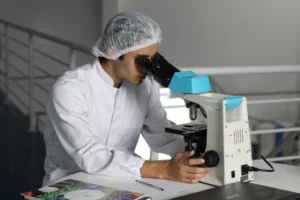
Pathologists record their notes immediately after reviewing slides or specimens. Those dictations hold the key to diagnosis, but they must be transcribed to become part of the medical record. Pathology transcription transforms those voice files into precise written reports that move smoothly through the lab’s workflow.
Even a small error can change meaning. Transcriptionists who understand pathology terminology ensure phrases like “non-invasive” and “invasive” are never confused. Precision protects both the patient and the provider.
Labs depend on turnaround time. Fast, accurate transcription keeps cases moving so that physicians receive diagnostic results without delay. It supports better coordination between departments and faster treatment decisions.
Modern transcription systems work directly with LIS and EMR platforms. Dictation files can be uploaded automatically, reports can be formatted for each system, and notifications can be sent when a report is ready for sign-off. This tight integration reduces manual work for lab staff.
Because pathology reports contain protected health information, transcription must comply with HIPAA from start to finish. Using a U.S.-based team with secure data transfer ensures confidentiality and regulatory compliance.
After transcription and review, the pathologist signs off electronically. The completed report becomes part of the patient’s official record, accessible to oncologists, surgeons, and other specialists involved in care.
Pathology transcription is a quiet but essential part of every lab’s workflow. It connects the pathologist’s spoken findings with the final medical report, ensuring accuracy, speed, and compliance at every stage. Partnering with 360 Transcription gives labs a dedicated U.S.-based team that understands medical terminology, maintains HIPAA compliance, and delivers reports on time. From dictation to diagnosis, 360 Transcription helps your lab work more efficiently and your patients get answers faster.
Pathology transcription requires familiarity with specimen types, microscopic descriptions, and specialized terminology. Accuracy and formatting are especially important because the report becomes part of a legal and diagnostic document.
Yes. Pathology transcriptionists are trained to recognize and correctly spell medical and Latin terms used in lab reports, including abbreviations and diagnostic phrases.
Turnaround time depends on the lab’s workload and the length of dictations. Most pathology reports are returned within 24 hours, often sooner for urgent cases.
Yes. Pathologists can record using digital devices or mobile apps, and files are securely uploaded to transcription systems that return completed reports electronically.
All files are encrypted during transfer and storage, handled only by HIPAA-trained staff, and stored on secure U.S. servers.
© 2026 360 Transcription. All rights reserved. Website by LuccaAM.com